30+ years of flooring experienceCall 903-541-9211

Application-first flooring guidance

Loose-lay Plank Flooring

Loose-lay plank floors provide a practical resilient option for flexible projects.

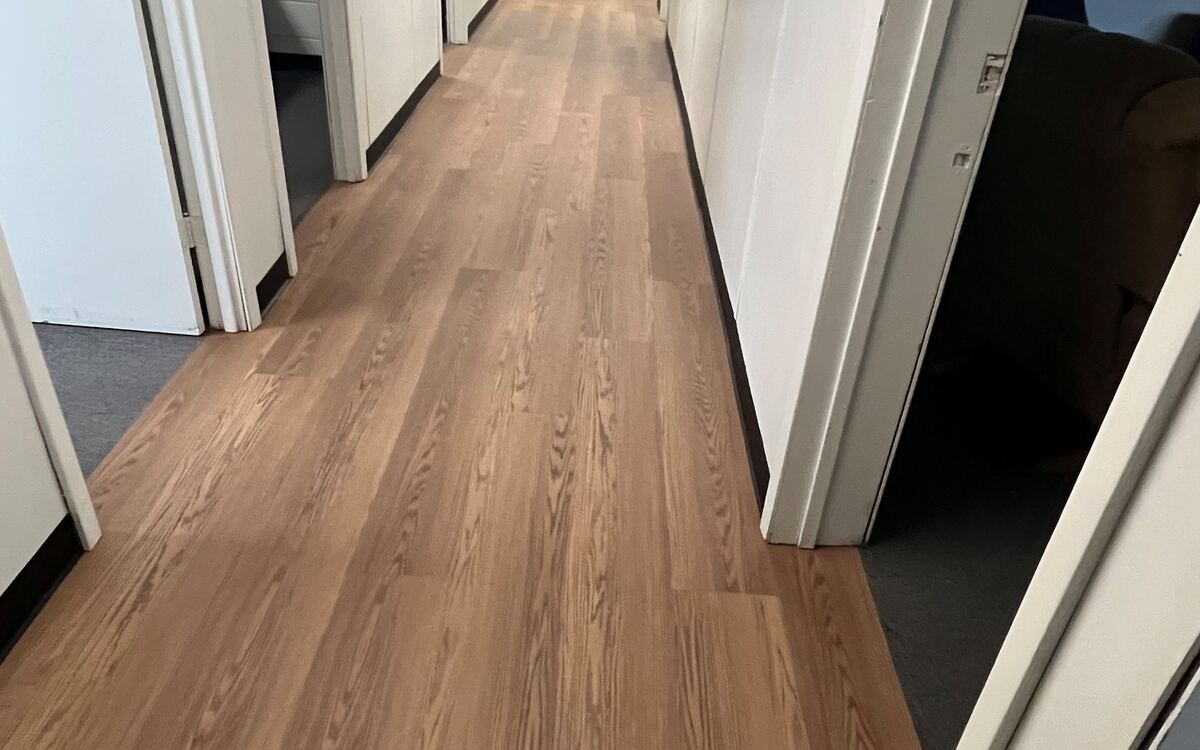
Installed wood-look loose-lay plank flooring
Loose-lay Plank Flooring example; current colors, constructions, and inventory vary.

Loose-lay plank flooring is a resilient category designed around dimensional stability, a substantial backing, and installation systems that can reduce reliance on a traditional full-spread adhesive. The name does not mean every plank can simply be placed over every subfloor. Room size, perimeter treatment, traffic, sunlight, rolling loads, and the manufacturer's installation instructions determine the correct approach.

Residential applications

Loose-lay Plank Flooring for East Texas homes

For renovations, additions, and rooms where finished height or future access matters, loose-lay plank floors can offer useful flexibility. They may simplify certain replacements and transitions, but the substrate still needs to be clean, sound, smooth, and suitable. Kitchens, direct-sun rooms, heavy islands, and connected layouts deserve a careful installation review.

Commercial applications

Planning for active interiors

Loose-lay resilient plank can be valuable in offices, multifamily turns, retail suites, and other spaces where downtime and individual-plank serviceability matter. Commercial traffic, rolling furniture, temperature swings, perimeter conditions, and adhesive zones may change the specification. Confirm approved room dimensions and installation details for the exact collection.

Compare before ordering

Selection and preparation

Ask how the selected product is retained in place and where adhesive or perimeter treatment is required. Compare backing construction, plank thickness, wear surface, dimensional limits, pattern repetition, transitions, and attic-stock recommendations. A site plan with room dimensions and fixed objects helps determine whether loose-lay construction is genuinely advantageous.

Project checkpoint: Review room size, perimeter requirements, rolling traffic, sunlight, and adhesive guidance.

Protect the result

Maintenance and long-term care

Use routine dry soil removal and manufacturer-approved resilient-floor cleaning. Promptly address spills and avoid products that leave a slippery film. Protect the surface from sharp furniture edges and confirm the correct chair mats or floor protectors for rolling loads. Keep spare planks from the original production run when future replacement flexibility is important.