30+ years of flooring experienceCall 903-541-9211

Application-first flooring guidance

Glue-down LVP Flooring

Glue-down LVP floors provide stable, low-profile performance for high-traffic spaces.

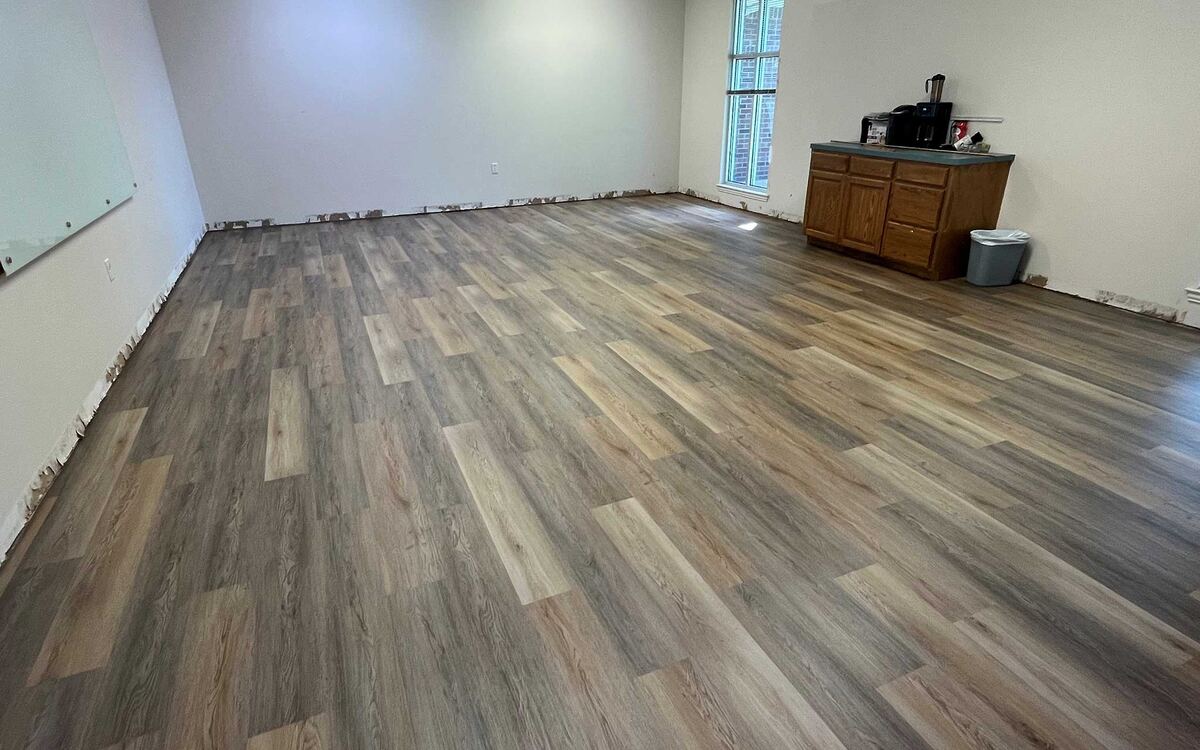
Office interior with installed glue-down LVP flooring
Glue-down LVP Flooring example; current colors, constructions, and inventory vary.

Glue-down LVP flooring bonds resilient planks directly to a prepared substrate, creating a stable, low-profile surface that performs well across connected and high-traffic spaces. It is especially useful where rolling loads, floor-height transitions, or individual-plank replacement matter. Successful performance depends heavily on substrate preparation, moisture evaluation, and the correct adhesive system.

Residential applications

Glue-down LVP Flooring for East Texas homes

In homes, glue-down LVP floors can be a practical choice for large open areas, renovations with limited height, rental properties, and rooms where a firmly bonded feel is preferred. The substrate may telegraph irregularities, so preparation quality affects the finished appearance. Layout, seams, pattern variation, transitions, and future access should be planned before installation begins.

Commercial applications

Planning for active interiors

Retail, offices, hospitality, multifamily, and other active interiors often benefit from glue-down LVP because damaged planks may be individually serviceable and rolling traffic is not carried by a floating locking system. The collection, wear layer, adhesive, rolling-load approval, maintenance program, and moisture conditions must be specified together.

Compare before ordering

Selection and preparation

Review wear surface, finish technology, plank dimensions, pattern repetition, approved traffic, adhesive requirements, substrate tolerance, and manufacturer moisture limits. Existing flooring, patching compounds, floor preparation, transition profiles, and downtime can materially affect the true project cost even when the plank itself is competitively priced.

Project checkpoint: Subfloor preparation, moisture testing, and adhesive selection are critical.

Protect the result

Maintenance and long-term care

Follow the adhesive and flooring manufacturers' timing requirements before opening the floor to cleaning, furniture, or rolling traffic. Use approved neutral cleaning products and avoid flooding seams. Entry matting, furniture protection, and a routine maintenance schedule help preserve appearance, especially in commercial spaces where tracked soil is the primary source of wear.